
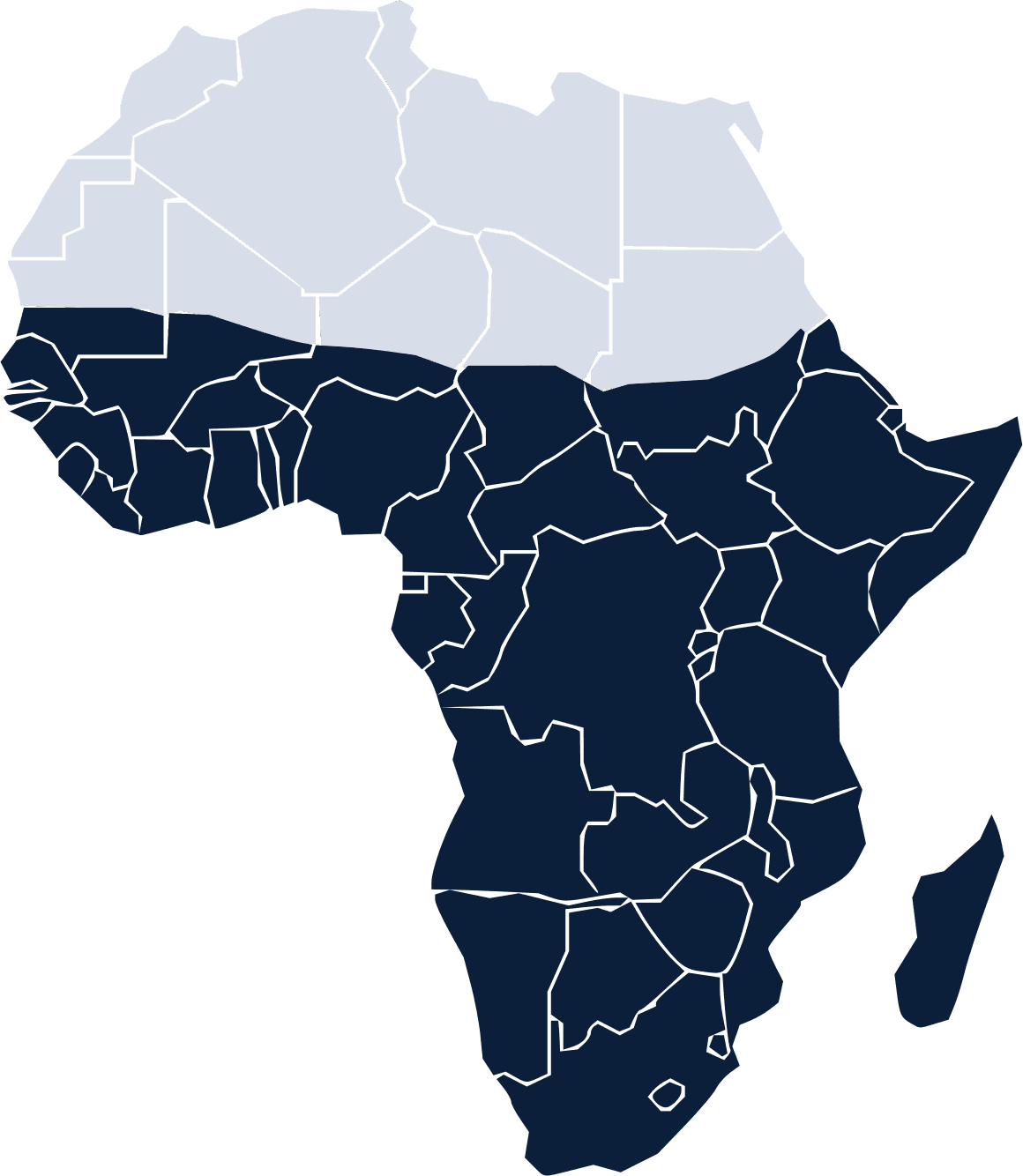
Invest Matching · Sub-Saharan Africa
Find the investment funds that finance companies in Africa
Is there a fund that fits your project?
Test your project in 30 seconds — free, no account needed
Describe your project in one sentence, as you would to a friend. Nothing is sent to an external service: the analysis runs in your browser.
93+ investment funds active in Africa are listed on our platform. Enter your company's key characteristics and find out instantly how many of them invest in your profile — sector, ticket size, geography, instrument.
- ✓ Instant result, no account required
- ✓ Hands-on support available from the GJO & Partners firm, under a separate engagement
Funds, club deals, business angels: create your investor profile with your criteria and browse the published files that match them.
Browse the fund directoryReference funds and their latest deals
What a fund signs says more than its thesis about what it finances. Here are the three most recent deals in the directory, with the fund that led them.
Breega
Biochar Industrial Group (BIG)
September 2026 · Nigeria · Agricultural inputs and services
1.5 M$Why they investedTeam with a decade of hands-on industrial operating experience in Nigeria (Releaf Earth, Y Combinator)
See the fund profile →Africa Jobs Fund
Luka
September 2026 · Financial services
Undisclosed amountSenior debtWhy they investedFinancing is often the binding constraint on corridor access
See the fund profile →Sahel Capital
Noma Services Consolidated
September 2026 · Nigeria · Grains and field crops
650 k$Senior debtWhy they investedDeepen aggregation capacity and strengthen operations
See the fund profile →
A few of the funds listed
- 500 Global
- A.P. Moller Capital
- Actis
- Acumen
- Adenia Partners
- Adiwale Partners
- AFIG Funds
- Africa Capital Alliance
For companies seeking funding
Post your progress, get noticed by investors
On Invest Matching, registered investors read company updates before company files. A figure, a signed contract, a product launch: every post moves your company up their feed.
- Certified investors follow, back and comment on your updates; you reply to them.
- Five credibility badges (verified incorporation, revenue, clients, employees, profitability) set your file apart.
- They contact you directly, by email or WhatsApp, if you open that channel. Your legal name stays hidden.
Beyond the first test
The full diagnostic, then a platform that works for you
The full diagnostic
- An Investment Readiness score on four weighted axes: ticket sizing, margin, fund coverage, instrument.
- The list of matching funds, ranked by probability, with the reasons for each score and their deals in your sector.
- The blockers identified and the actions to take before the first meeting, as a PDF report.
Keep track over time
- New fund deals land on their profiles: you see who signs, in what, and why.
- Your matching funds are recalculated on every visit: as your revenue or margin grows, new funds may fit you.
- Every fund added to the directory is compared with your file: a new thesis that fits your project shows up in your account.
Frequently asked questions about funding in Africa
- How do I know whether an investment fund can finance my company?
- A fund only invests within the perimeter set by its thesis: a sector, a ticket range, a list of countries and a type of instrument. An Ivorian agribusiness looking for $300,000 will not interest an infrastructure fund whose minimum ticket is $10M, however strong the file. The filter compares your four key characteristics (sector, country of operation, amount sought, instrument) against each profile's criteria, taken from the fund's public information or entered by the fund itself, and tells you immediately how many profiles are compatible with yours.
- What amounts do the listed funds invest?
- The range runs from around $25,000 for business angels and seed funds to over $50M for infrastructure and private equity funds. Most funds active in sub-Saharan Africa sit between $500,000 and $10M. Every directory profile shows the fund's minimum and maximum ticket, so you can rule out those beyond reach for your need straight away.
- Which African countries are covered?
- The platform covers francophone and anglophone sub-Saharan Africa — Cameroon, Côte d'Ivoire, Senegal, Nigeria, Ghana, Kenya, Burkina Faso, Mali, Togo, Benin, Gabon, DRC, Uganda, Madagascar — as well as North Africa (Morocco, Tunisia, Egypt). Some funds think in regional blocs (WAEMU, CEMAC, West Africa, East Africa) rather than individual countries: the matching takes this into account.
- What types of funding can I look for?
- Four broad families. Equity: the fund takes a stake and is rewarded when it sells. Quasi-equity: convertible bonds or revenue-indexed debt, halfway between capital and a loan, with no immediate dilution. Senior or mezzanine debt: a repayable loan, suited to companies that are already profitable. Guarantees: the fund does not lend to you directly but covers your bank, unlocking local credit. Your choice strongly shapes the list of eligible funds.
- Does my file stay confidential?
- Yes. Your legal name is never shown publicly: investors only ever see an anonymous teaser with sector, country, key figures and funding need. Your pitch deck is stored privately and is only accessible through secure, time-limited links, and only to the investors you choose to reply to. The initial test does not even require an account.
- Is the service free?
- The test and the directory are free and require no account. Creating a full file, with a completeness score and a detailed list of matching funds, is also free. Only hands-on support from the GJO & Partners firm (structuring the file, preparing for investment committees) is handled as a separate engagement, billed on fixed fees and never by reference to a transaction concluded.
- What is the completeness score?
- It is a rating, visible to you alone, that measures how complete your file is against what investors generally ask for: consistency between the amount sought and your figures, existence of a revenue track record, EBITDA filled in, presence of a pitch deck, clarity of your stage of development. A low score blocks nothing: it identifies what to strengthen before facing an investment committee. It is not shown to investors.